Abstract
China has systematically collected nighttime astronomical plates since 1900, creating a large historical dataset that has been digitized with optical scanners. For astrometric registration of these digitized plates, sources were first extracted using SExtractor, and then matched astrometrically with Astrometry.net and the Gaia catalog. However, suboptimal early storage conditions and subsequent environmental deterioration have impeded accurate source matching, resulting in processing failures for several thousand digitized plates. In this work, we introduce a Transformer-based classification model that takes cutouts of SExtractor-detected sources as input and leverages multi-scale feature fusion to identify trustworthy stellar sources on the plates. Trained on plates with successful astrometric calibration, our AI-based classifier was then applied to SExtractor detected sources of 1883 digitized plates, enabling us to complete the astrometric registration for 1353 of them. This AI-augmented pipeline streamlines the processing of historical plate archives and enhances their scientific value for long-term time-domain astronomical studies.
Background & Motivation
While modern astronomical telescopes serve as "digital cameras" capturing the universe, the astronomical plates from the last century are the "film rolls" that recorded the starry sky. Since 1900, Chinese astronomers have systematically collected a massive number of nighttime astronomical plates, forming a vast historical database. Plate records celestial phenomena such as supernova explosions and asteroid trajectories spanning centuries, serving as a long-term time-domain astronomy research.
Astrometric registration workflow
How do astronomers determine the precise coordinates of these century-old records? Historical plates often lack coordinate information, functioning much like ancient nautical charts without latitude and longitude. To pinpoint the specific sky area captured on a plate, astronomers extract clear stars as "landmarks" and use the unique geometric properties of the polygons they form to search for and cross-reference them in high-precision modern standard star catalogs (such as the Gaia catalog).
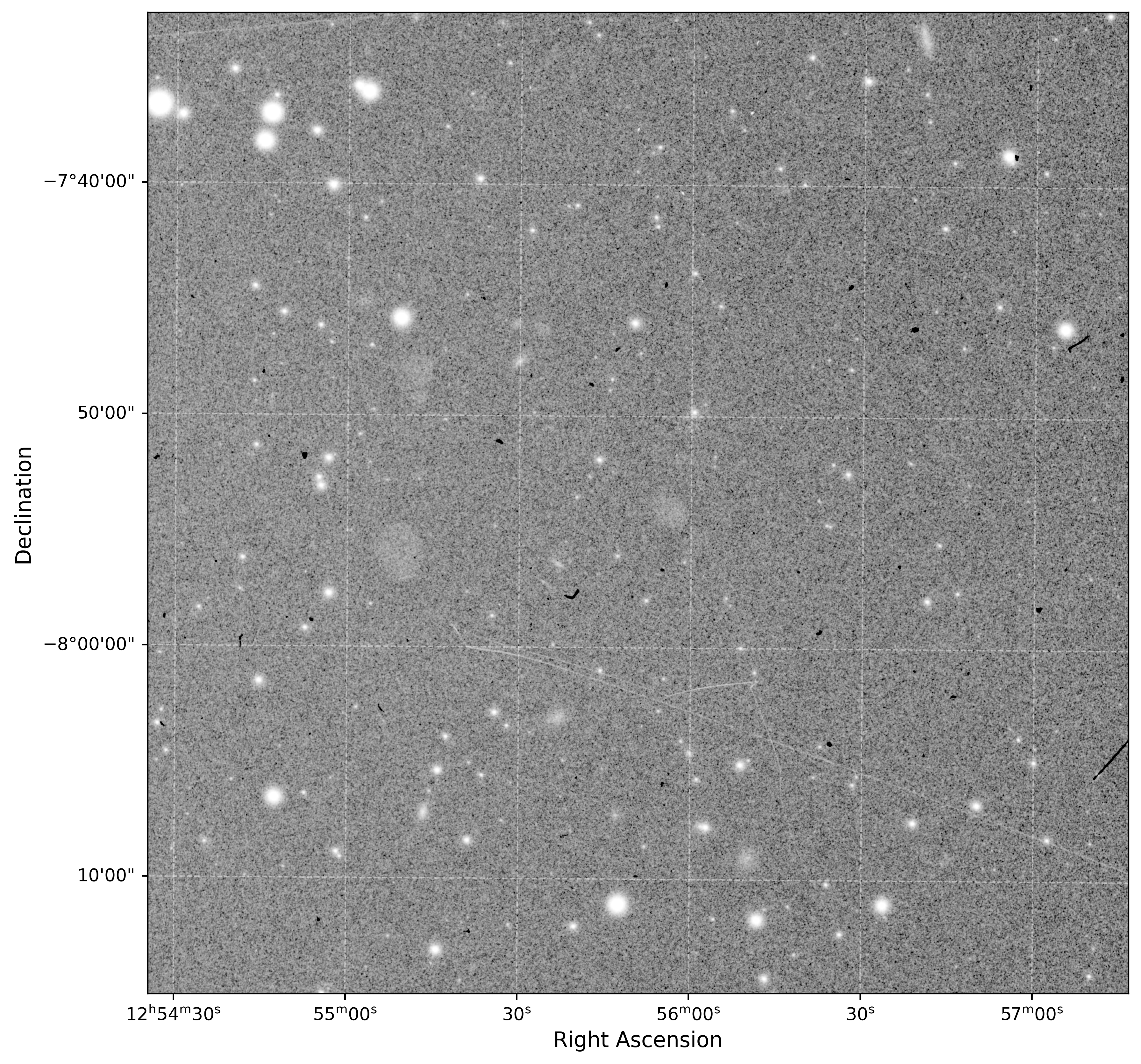
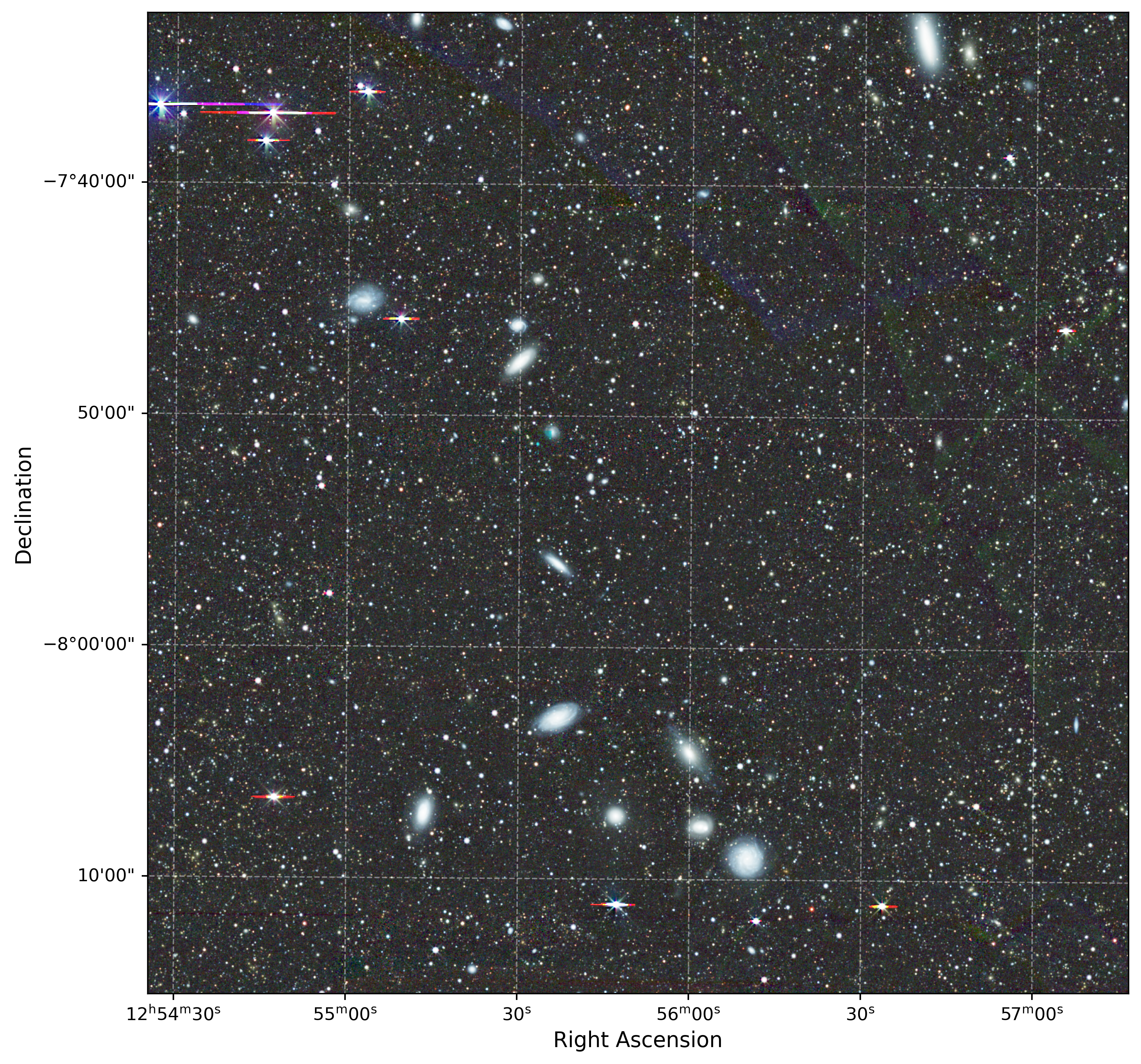
Astronomical Digital Plate Image Calibration
Left (Raw Plate): The original historical digital plate. Right (DESI): Precisely astrometric registration for modern sky surveys.Since the relative positions of the vast majority of stars change only minutely over several decades, analogous to the subtle geological shifts of "landmarks" on a nautical chart, astronomers correct the matching by incorporating small shifts estimated from the elapsed time and the stars' proper motions. Upon successful resolution, the precise cosmic coordinates of the sky area photographed decades ago are perfectly locked in.

The astrometric registration of these digitized plates consists of three main steps: source extraction, stellar source classification, and astrometric matching. To ensure the success of the matching algorithm, our work focuses entirely on the vital preceding step: accurately classifying and distinguishing genuine stellar sources from plate artifacts before the geometric matching begins.
The Challenge
However, the gifts of history often bear the scars of time. Due to early storage conditions, many plates are covered in mold spots, have scratches, or have even suffered physical fractures.
Traditional computer algorithms simply use all extracted signals directly for astrometric matching, indiscriminately mixing genuine stellar point sources with mold spots and scratches. This number of scratches frequently leads to the collapse of the registration system, and all the scientific information it carries becomes completely invalid. Statistically, nearly two thousand highly valuable historical plates were deemed unsolvable by traditional methods due to severe degradation.
Our work
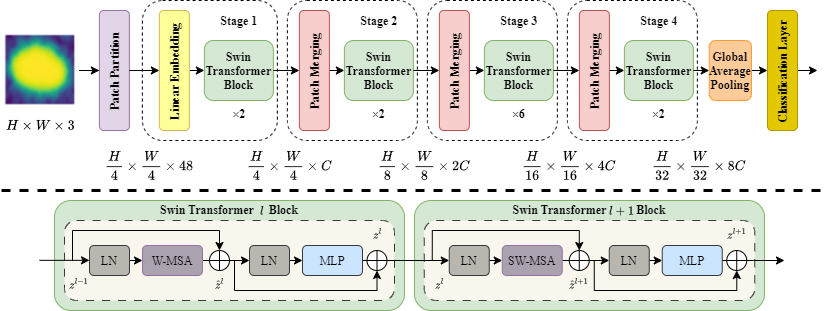
To address this challenge, researchers at the Shanghai Astronomical Observatory introduced a deep learning framework designed to restore the scientific utility of heavily degraded plates. Governed by telescope optics, genuine stars consistently exhibit stable photometric profiles, whereas scratches display highly irregular morphologies. Leveraging this physical distinction, we developed a dedicated image classification model based on the Transformer architecture. This model effectively synthesizes local pixel features with global visual context, enabling the precise differentiation of authentic stellar point sources from environmental noise.
To optimize classification performance across heterogeneous datasets, we implemented a two-stage, metadata-guided training strategy. Initially, a "Base Model" was trained on well-preserved plates to establish robust baseline capabilities for stellar recognition. Subsequently, to account for the systematic variations introduced by different telescope apertures and exposure conditions across multiple observatories, we integrated these physical parameters into our workflow. This approach enabled the development of "Fine-Tuned Models" explicitly tailored to accurately process plates suffering from severe degradation.
Conclusion & Quantitative Results
Our AI-augmented pipeline was applied to 1,883 digitized historical plates that had previously failed astrometric registration using traditional methods. The results demonstrate the exceptional resilience of our deep learning framework against environmental deterioration.
Through the combined use of our Base Model and metadata-guided Fine-Tuned Models, we successfully completed the astrometric registration for 1,353 of these challenging plates. Remarkably, the model maintained robust feature extraction even on severely degraded data, achieving success rates of nearly 68% for plates with visible mold, scratches, or minor detachment (Grade 2 and Grade 3 plates).
(Failed by Traditional Methods)
by Our Framework
on Degraded Data
BibTeX
@article{xu2026,
      title={Enhancing astrometric registration of Chinese historical Astronomical Digital Plates with deep learning},
      author={Quanfeng Xu and Zhengjun Shang and Shiyin Shen and Yong Yu and Meiting Yang and Hao Luo and Zhenghong Tang and Jing Yang and Jianhai Zhao},
      journal={Research in Astronomy and Astrophysics},
      url={http://iopscience.iop.org/article/10.1088/1674-4527/ae5f6a},
      year={2026}
}